
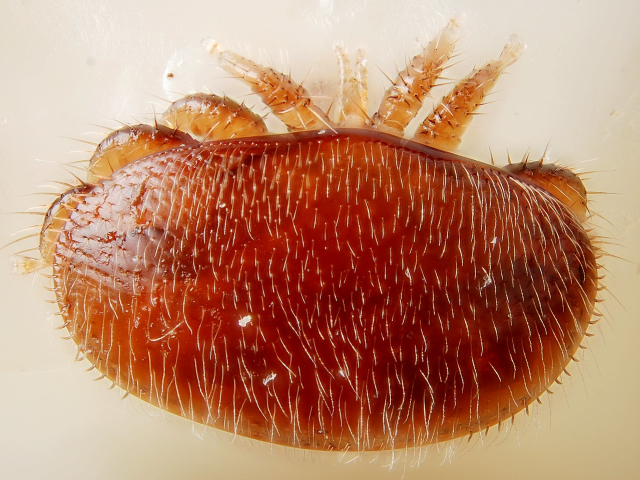
Management doesn’t block natural Varroa resistance – It buys time for it
by Nathan Whitford
The big question: ―If the long-term goal is naturally varroa-resistant bees, how does using chemicals fit into that?‖
The honest answer is… it doesn‘t. Not directly. But the bigger picture matters, and in Australia the picture is huge.
Here in Geelong, we‘ve got more than 1000 registered beekeepers, and probably plenty more who never got around to filling out the paperwork. Victoria holds roughly a quarter of the nation‘s beekeepers and close to 300 commercial operations. Nationally, honeybee farmgate revenue has climbed from $279 million in 2019 to $363 million in 2025, and the pollination industry contributes a staggering $4.6 billion to Australia‘s economy every single year. Recreational beekeepers alone add another $260.2 million through equipment, training, and supply chains.1
Should we let nature take its course? It‘s a great question, but keep in mind this isn‘t just a backyard-beekeeper question. It touches livelihoods, Australia‘s national food security and sovereignty, regional employment, and the stability of industries that rely on pollination. And that‘s before we even consider what happens to Australia‘s feral honey bee population.
For decades, Australia has had enormous feral honey bee populations. Professor of Behaviour Genetics, Ben Oldroyd, researched feral bee density in Wyperfeld National Park and recorded between 50 and 150 colonies per square kilometre,2 and Saul Cunningham‘s 2022 study still found around 69 colonies per square kilometre in fragmented woodlands.3 Anyone who‘s gone for a walk around Geelong has probably spotted a few tucked into tree hollows, roof spaces and old Telstra pits.
Feral European honey bees bring some benefits, free pollination for growers and gardeners, however they also push native pollinators off flowers and compete heavily for nectar.4 Feral hives can also bring pest and disease to managed hives; however, varroa changes that dynamic overnight.
Based on the New Zealand experience, around 90–95% of feral colonies collapse within 2–3 years of varroa establishing. Any collapse in honey bee populations, whether it‘s a backyard hive, a commercial apiary, or a feral colony, has real consequences. Pollination drops. Food production suffers. Commercial beekeepers can‘t meet pollination or honey demand. Regional communities feel the strain and our grocery prices go up, while native pollinators may return to flowers they‘ve avoided for years, and a handful of feral bees may survive the varroa wave.
This doesn‘t instantly produce a varroa-resistant honeybee. I get the concept; it makes logical sense, the survival of the fittest. However, evolution doesn‘t work that fast, and the idea that the handful of feral colonies that survive must be ―evolving resistance‖ is a comforting story, but the science says otherwise. Surviving feral colonies are usually just lucky, as they may be isolated, had low mite counts, or sat in a cooler microclimate that slows mite reproduction.5
It took until 1963 before the varroa mite was first found on European honeybee in Hong Kong and Singapore.6 If we look at New Zealand, and the United States after more than 30 years of varroa, neither country has produced a naturally mite-proof honeybee. Managed colonies still rely on monitoring and intervention to stay alive. The idea that Australia will somehow leapfrog decades of global experience by doing nothing simply doesn‘t hold up.
People sometimes point to Cuba as proof that bees can ―naturally‖ become varroa-resistant if we just stop treating. But Cuba‘s story starts with a massive crash. When varroa arrived in the 1990s, the country was in economic crisis and couldn‘t import miticides,7 and both managed and feral European honey bee colonies collapsed heavily.
The bees that survived weren‘t super bees; they were simply the lucky ones in cooler microclimates or isolated apiaries, showing behavioural traits rather than any proven genetic resistance. Fast-forward three decades, and Cuba now has the world‘s largest treatment-free, varroa-resistant European honey bee population, with around 220,000 managed colonies, and their resistance isn‘t genetic immunity; it‘s behavioural.
These behavioural traits include recapping, mite removal, and low mite fertility, the same traits seen in other naturally evolved resistant populations.8
Cuban bees didn‘t start out resistant, nor did Cuba have a hidden reservoir of resistant bee stock. Some early varroa resistance elsewhere was linked to Africanised bees, but Cuba‘s bees are European, which means their resistance came from decades of harsh natural selection, not from a naturally resistant bee lineage.
Cuba also didn‘t get here by doing nothing. After the initial crash, the industry rebuilt through selective breeding, monitoring, and a strict ban on imports, which helped stabilise these traits.8 The lesson isn‘t that doing nothing works. The lesson is that unmanaged collapse comes first, and recovery takes decades.9
That brings us back to the heart of the issue, which is managed bees are the only stable reservoir of honey bees we‘ll have left once varroa sweeps through Victoria. They carry the genetic diversity, the pollination capacity, and the continuity needed to rebuild. If we lose them, we lose the foundation for any future breeding program and we lose a lot more than honey.
Australia has around 855,000 registered managed hives, and until varroa arrived we also had the highest density of feral honey bees anywhere in the world. That combination makes the idea of ―rebuilding the industry from survivor stock‖ almost impossible. You can‘t replace nearly a million managed hives, plus the pollination services they provide, by collecting a few scattered survivor colonies from tree hollows. The maths just doesn‘t work and neither does the biology.
Treating and managing your bees through varroa isn‘t about coddling weak bees. It‘s about making sure we still have bees, beekeepers, families, jobs, and food on shelves when the dust settles.
None of this means you must treat your hives at the first sign of trouble. You‘ve got options. Integrated Pest Management gives us plenty of tools: brood breaks, heat treatments, screened bottom boards, drone brood removal, and even mechanical grooming aids like ―bee gyms.‖ We haven’t even got to chemicals yet. Even our Geelong winters may help. All these methods help reduce mite pressure, and if you can keep your numbers down without chemicals, that‘s fantastic.
No beekeeper I know wants to add chemicals to their hive. But when mite levels hit the threshold, sometimes a treatment is the difference between a colony that survives and one that collapses. As multiple studies show, varroa can drive colonies to collapse, but the disappearance of susceptible colonies is not the same as the evolution of resistance. Extinction removes bees; evolution requires heritable traits that improve survival.
When you do need to treat, rotating modes of action is essential to prevent resistance. We are living in a country where our food system, our pollination capacity, and our beekeeping community depend on keeping colonies alive through the varroa era.
As a club, our role is straightforward: we share good information, support each other, and encourage sound, legal beekeeping practices across our community. And as members, it helps to remember that beekeeping has never been a one-answer solution; ask ten beekeepers and you‘ll still walk away with twelve opinions. Respecting those different approaches is part of what keeps our club strong. At the end of the day, you‘re the one standing in front of your hive, making the decisions that are right for your bees.
It would be lovely to have a strain of varroa-resistant honey bees, but it seems doing nothing and letting nature take its course is not the direct route, and unfortunately science, bee genetics and breeding isn‘t here yet either. Maybe the best thing we can do is ensure there‘s still a beekeeping industry on the other side of varroa.
Special thanks to Bianca Giggins at the Australian Honey Bee Industry Council for her feedback on my early draft, including updates to commercial operation numbers and farmgate sales figures. Bianca‘s insights were also instrumental in identifying research on Australia‘s feral honey bee populations and highlighting the broader implications for national food security.
Thank you also to Jurg Schutz for his thoughtful questions around citation accuracy and for showing me how to use Microsoft Word citations.
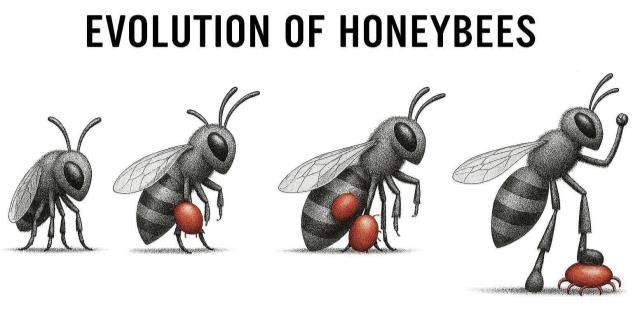
The Geelong Beekeepers Club has previously welcomed Dr Nadine Chapman and Dr Jody Gerdts as guest speakers, and they‘ve recently published an insightful piece on naturally varroa-surviving honeybee populations. Their work adds an important perspective to the national conversation about how managed and unmanaged colonies survive or fail in the presence of varroa.
Nathan Whitford is the president of the Geelong Beekeepers Club.
This article originally appeared in the Geelong Beekeepers Club May 2026 newsletter.
References
1 Clarke, M., and Le Feuvre, D.. 2024. Size and Scope of the Australian Honey Bee and Pollination Industry: An Updated Snapshot for 2023. Wagga Wagga, NSW: AgriFutures Australia.
2 Oldroyd, B. P., Thexton, E. G., Lawler, S. H., & Crozier, R. H. 1997. ―Population Demography of Australian Feral Bees (Apis mellifera).‖ Oecologia 111 (3): 381–387. https://doi.org/10.1007/s004420050249
3 Cunningham, S. A., Crane, M. J., Evans, M. J., Hingee, K. L., & Lindenmayer, D. B. 2022. ―Density of Invasive Western Honey Bee (Apis mellifera) Colonies in Fragmented Woodlands Indicates Potential for Large Impacts on Native Species.‖ Scientific Reports 12: 3603. https://doi.org/10.1038/s41598-022-07635-0
4 Gross, C. L. 2001. ―The Effect of Introduced Honeybees on Native Bee Visitation and Fruit-Set in Dillwynia juniperina (Fabaceae) in a Fragmented Ecosystem.‖ Biological Conservation 102 (1): 89–95. https://doi.org/10.1016/S0006-3207(01)00088-X
5 Bartlett, L. J., et al., 2024. ―Faster-Growing Parasites Threaten Host Populations via Patch-Level Population Dynamics and Higher Virulence; A Case Study in Varroa Mites (Mesostigmata: Varroidae) and Honey Bees (Hymenoptera: Apidae).‖ Journal of Insect Science 24 (3): 17. https://doi.org/10.1093/jisesa/ieae049
6 Columbia University. n.d. ―Varroa Mite (Varroa destructor).‖ Introduced Species Summary Project. https://www.columbia.edu/itc/cerc/danoff-burg/invasion_bio/inv_spp_summ/varroa_destructor.html [Accessed 2026 April 22nd]
7 Funes-Monzote, F. 2017. Farming Like We’re Here to Stay. Burlington, VT: NOFA-VT. YouTube video, 2017 March 27th. [Accessed 2026 April 22nd].
8 Luis, A. R., Grindrod, I., Webb, G., Pérez Piñeiro, A., & Martin, S. J. 2022. ―Recapping and Mite Removal Behaviour in Cuba: Home to the World‘s Largest Population of Varroa-Resistant European Honeybees.‖ Scientific Reports 12: 15597. https://doi.org/10.1038/s41598-022-19871-5
9 Rosenkranz, P. 1999. ―Honey Bee (Apis mellifera L.) Tolerance to Varroa jacobsoni Oud. in South America.‖ Apidologie 30: 159–172. https://doi.org/10.1051/apido:19990206