Miticide Registrations, APVMA & The Role Of AHBIC

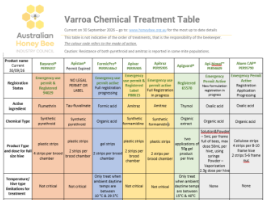
Danny LeFeuvre, CEO AHBIC, 2026 There has been commentary across industry about the APVMA process for varroa miticides and what role AHBIC plays. It is important to separate three things: emergency permits, full product registrations, and AHBIC‟s advocacy role. Emergency permits Emergency permits are temporary approvals used to legalise the use of an agvet chemical … Read more

Resistance Reverberates

By Andrew Wootton Once again, we are faced with unwelcome news – amitraz resistant mites have been found in Australia.1 Perhaps even more alarming is that AHBIC states that these are genetically distinct from the original mite incursion, confirming a second breach of our (once vaunted, now porous) biosecurity border. How long until deformed wing … Read more

Prophylactics

By Kris Fricke I‟d have thought we can all agree that you shouldn‟t engage in “risky behaviour” with multiple partners of unknown infectious disease status without any protection, right? But that has been the policy recommendation of the National Varroa Mite Management Program. “Don‟t use miticides prophylactically” they say, (ie, as a protective measure) if … Read more

Mystery Mites

By Kris Fricke (& substantial quotes from Bruce Ward) Werribee Mystery Mite On the evening of Monday April 6th Werribee area beekeeper David Ross posted on the Werribee Beekeepers‟ facebook page: Tonight I had a bee come inside that was clearly struggling, I put it out of its misery with a cloth and a large … Read more

Varroosis

By Kris Fricke What do you think when you hear the term PMS? What if your friend tells you, as you catch him getting out of his bee truck looking harried, “ah, mate, the girls have PMS”? “Parasitic Mite Syndrome” was coined in the United States in 1994 when both tracheal and varroa mites were … Read more

Winter Bees

As we approach our first Victorian winter with varroa mites, we must be even more careful to consider colony health. Bees in winter are different from those of the rest of the year. Instead of a work-weary demise after about 6 weeks, winter bees are longer lived. Indeed in climates much colder than ours, they … Read more

Resistance Revisited

Andrew Wootton First the bad news I wrote of the dangers of miticide resistance developing in Australia in December’s ABJ.[1]  Alarmingly, resistance to Bayvarol has already been reported from NSW in the AHBIC News of 11th February[2] and now on the 27th February, a further occurrence in Queensland is announced.[3] With the NSW mites, pyrethroid … Read more

Storm Clouds Gather

By Andrew Wootton With several varroa detections in metropolitan Melbourne and the Victorian varroa heat map looking like a Christmas pudding, we can safely assume that you either already have mites in your hive or will have this season.So it was encouraging to attend the Melbourne Section club meeting on the 29th January and see … Read more

Miticide Resistance And How To Avoid It

Extracts From The AHBIC January newsletter Do you know what miticide resistance is? Miticide resistance happens when some Varroa mites carry genetic traits that make them less likely to be killed by a specific chemical treatment. Within any mite population, there is natural variation — a few indi-viduals may, by chance, have genetic differences (e.g., … Read more

Let’s Stop Sugar Coating It: The Powdered Sugar Shake Is Not Harmless

By Mike Allerton The powdered sugar shake has been widely promoted as the gentler option for monitoring Varroa destructor, especially among hobbyist beekeepers who feel uneasy about killing a small sample of bees in an alcohol or soapy water wash. For years, the assumption has been that bees walk away unharmed after being dusted with … Read more