September 2026
The VAA Chemical Working Group continues to work directly with Agriculture Victoria on the implementation of the department-led Industry Action Plan (IAP), with a clear focus on practical outcomes for Victorian beekeepers.
Since late 2025, the Working Group has been providing industry advice on the rapidly evolving challenges surrounding varroa treatment, agricultural chemical use, record-keeping and compliance. Over the three-year program, the Working Group and Agriculture Victoria will focus on several key priorities: exploring available pathways to legal treatment options, improving education around agricultural chemical use and compliance, establishing baseline chemical-use and residue data, strengthening industry– government engagement, and developing a more practical, riskbased approach to agricultural chemical compliance.
Advocacy and Industry Action
The VAA Chemical Working Group recently held its second meeting with Agriculture Victoria’s chemical regulation team. Victorian beekeepers are now managing varroa as an ongoing part of their business. Miticide resistance has been detected in Australia, including Victoria. This means access to effective, practical, and legally compliant treatment options is increasingly important. The Working Group is focused on ensuring the experience and practical needs of Victorian beekeepers are represented as Agriculture Victoria progresses the Industry Action Plan.
Practical Outcomes for Beekeepers
Importantly, the second meeting delivered two practical outcomes for Victorian beekeepers through the Working Group’s engagement with Agriculture Victoria. VAA Chemical Working Group September 2026
Formic Pro
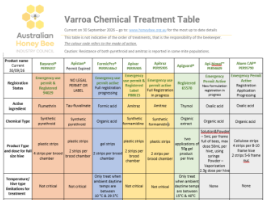
The Working Group has confirmed with Agriculture Victoria that Victorian beekeepers may use single pad applications of Formic Pro as part of a complete treatment. This provides greater flexibility for beekeepers incorporating formic acid into an integrated varroa management program and allows treatment decisions to better consider seasonal conditions, colony strength, and mite pressure.
Apiguard Gel for Beehives
The Working Group has also confirmed with Agriculture Victoria that Victorian beekeepers may use a half-dose Apiguard treatment option. Again, this provides greater flexibility when incorporating thymol into an integrated varroa management program under different seasonal and colony conditions. These are positive early outcomes from the Industry Action Plan which demonstrates the value of having experienced Victorian beekeepers directly engaged with regulators. There is considerably more work to do. As varroa management evolves in Australia, maintaining access to a range of effective treatment options, while supporting responsible chemical use, good record keeping and integrated pest management, will remain critical. The VAA Chemical Working Group will continue to advocate for practical treatment pathways, clear regulatory guidance and an approach that recognises both the regulatory responsibilities of government and the realities of managing bees commercially and recreationally.
We will continue to keep Victorian beekeepers informed as this work progresses.