By Gill Greenstein
Thanks to Bruce Diggles, VAA Melbourne Section Librarian, for choosing this book. Before you read the review, here is a potted history of Brother Adam.
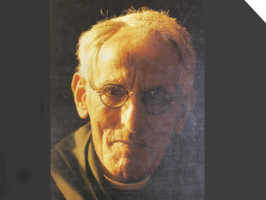
Brother Adam was born in 1898 and died in 1996, and in between he spent over 70 years breeding and evaluating Buckfast bees.
He was sent to the Benedictine monks at Buckfast Abbey in England at the age of 11 owing to poor health. In 1915 he began assisting the abbey beekeeper and started his beekeeping apprenticeship. One year later in 1916, 30 of the 46 black bee colonies the abbey had were devastated by Isle of Wight disease.
During those formative years Brother Adam’s experiences influenced his thinking and gave birth to the idea:
He travelled extensively, visiting more than 70 countries and observing different bee traits, from bees in the oases of the Sahara Desert, such as A.m. sahariensis, across Europe, Middle East, North Africa, to the slopes of Kilimanjaro, collecting bees, noting traits like wing power, spring development, tongue reach, resistance to disease and pests and so on.
As part of Brother Adam’s research, he installed an isolated breeding station on Dartmoor, to obtain selected crossings. If you get the opportunity to visit, don’t forget your umbrella. The rainfall is twice that of the rest of the country.
Brother Adam sadly passed away at in 1996 at the age of 97 years, at the time the oldest English Benedictine monk. During his lifetime he received two honorary doctorates, the Order of the British Empire (OBE), and the Order of Merit of the Federal Republic of Germany (the Bundesverdienstkreuz) for his scientific work with bees.
Brother Adam wrote three books:
- In Search of the Best Strains of Bees
- Beekeeping at Buckfast Abbey
- Breeding the Honeybee
And “Breeding the Honeybee,” is definitely a book to have on your shelf. I found it fascinating from the perspective of a colony owner, rather than just a queen breeder. It looks at the colony as a whole, considering the qualities and traits that are influenced by both the environment and genetics, and how these can ultimately benefit the beekeeper. For me, this is what makes the book so interesting. It encourages you to look beyond the queen and consider the colony as a whole.
“The whole is greater than the sum of its parts.” Thanks, Aristotle!
Brother Adam’s book is divided into three parts:
- Theory of Breeding
- Practical Possibilities in Breeding
- An Evaluation of the Breeding Possibilities of the Different Races of Honey Bees
Brother Adam takes you through the genetics. This was a challenge! I haven’t done much with genetics since I was studying my O-levels, and I don’t think that covered haploid, diploid and parthenogenesis.
Then there’s that great little quote:
After a late-night session brushing up on chromosomes, genes and alleles, and lots of conversation with my study buddy, “Chat,” I ploughed on through Brother Adam’s book.
Brother Adam’s book also prompts you to look at hive health, good management practices and what you actually want from your bees. Granted, Brother Adam had 70 years –and access to a car!— To explore thousands of miles through Europe, the Middle East and North Africa, studying and collecting different bees with the qualities he was looking for: temperament, disease resistance, foraging ability and so on.
He also had the time to explore different types of genetic breeding, whether it was nature’s way, pure breeding, line breeding, cross breeding or combination breeding. He spent years evaluating, documenting and scoring the results.
And I think he probably bred a lot of bad-tempered bees along the way, which he then had to breed out! For many of us, having the right bees for production is an economic goal. For others, it’s simply having bees that don’t sting the hell out of your dog, your neighbours and you!
Brother Adam really does provoke you to think about the primary and secondary qualities you want in your bees, and the qualities that influence management.
There’s a great example of this in a Dutch research team Dr Judy Gerdts mentioned during a conference talk, about their bee-breeding work. They bred what they called “get-down bees,” bees that would get down the frame when you lifted the lid. I thought that was brilliant!
So, I recommend this book. It’s definitely one to have on your shelf. It gives you a great insight into genetics and bee breeding and, more importantly, it gives you plenty of food for thought.
I would probably read it alongside the NSW Department of Primary Industries’ Queen Bee Breeding material.
So, for me:
🍯🍯🍯🍯🍯Five honey pots — one for your bookshelf.
And I think it’s a book you’ll come back to again and again!
Honey Pot Rating:
🍯🍯🍯🍯🍯Outstanding – Every beekeeper should read it.
🍯🍯🍯🍯Worth owning.
🍯🍯🍯Good library borrow.
🍯🍯Only if you’re particularly interested.
🍯Save your honey money!