
From the Back Fence to the Front Line of Food Security
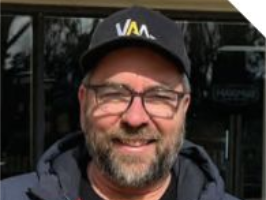
By Lindsay Callaway, President, Victorian Apiarists’ Association
There is something fitting about this edition of the Australian Bee Journal. A new look. A new editor. A new chapter for a journal that has been documenting Australian beekeeping for more than a century. But the change happening around the Australian Bee Journal is much bigger than a new layout.
Beekeeping itself is changing.
For generations, ours has been an industry that has largely gone about its business quietly. We worked the bush, produced honey, moved bees onto crops and played an enormous role in Australian agriculture — often without the wider community really understanding what we did. Bees and beekeepers were somewhere over the back fence. Today, beekeeping and pollination are increasingly being discussed in agricultural boardrooms, government departments, the media and the halls of Parliament. Unfortunately, it has taken varroa to bring much of that attention.
Beekeepers First
Before talking about billions of dollars of agriculture, food security and pollination-dependent crops, I think it is important that we remember where this conversation starts: with beekeepers. The VAA’s purpose is Beekeepers First. That does not mean beekeepers at the expense of growers, government, researchers or the wider agricultural community. Quite the opposite. It means recognising that without healthy, skilled, commercially viable beekeepers, there will not be enough healthy, professionally managed bees to provide the pollination services agriculture increasingly requires. The beekeeper is not incidental to pollination security. The beekeeper is what makes managed pollination possible. Varroa has fundamentally changed the economics and operating requirements of keeping bees. Monitoring, treatments, additional labour, record keeping, nutrition, queen replacement and managing treatment resistance are becoming permanent parts of running a beekeeping business. Our own VAA briefing to government estimated an additional varroa management burden in the order of $80–$100 per hive annually when treatment, labour and increased queen replacement are considered. For a commercial beekeeper running 1,000 hives, that is potentially another $80,000–$100,000 every year. That is why supporting the beekeeper must remain at the centre of the conversation.
The conversation has changed
The numbers explain why the conversation around us is getting louder. Honey bees support billions of dollars of Australian agricultural production every year. Here in Victoria, our VAA work has estimated approximately $1.4 billion in annual farmgate output from highly pollination-dependent crops, increasing to approximately $2.9 billion when crops partially dependent on honey bee pollination are included.1 Yet the commercial beekeeping industry responsible for maintaining much of that pollination capacity is comparatively tiny, currently sitting at around 100 commercial beekeepers in Victoria. That imbalance is important. We are not asking government to protect the value of the honey crop. We are asking government to recognise and help protect the beekeepers and the pollination capacity behind billions of dollars of Victorian agriculture.
Taking that message to both sides of politics
In recent months, fellow VAA Board member Monré Meyer and I have continued taking this case directly to Victorian decision-makers. We have met with representatives of the State Government and, separately, senior members of the State Opposition, including Emma Kealy MP and Melina Bath MP. Our message has deliberately remained consistent: Pollination security should be above politics. Varroa is not simply another beekeeping problem. It represents a structural change to Victoria’s pollination system and, ultimately, to our food security. Our briefing argued that beekeeping should no longer be viewed simply as a small livestock industry, but as critical enabling infrastructure for Australian horticulture and food production. But again, infrastructure doesn’t operate itself. Behind every professionally managed hive is a beekeeper making decisions, doing the work, carrying the risk and paying the bills. We need to retain those people.
The free service we never measured
Perhaps the biggest change ahead is one we cannot fully see yet. Across Australia there is an enormous population of unmanaged European honey bees living in trees, walls, sheds and anywhere else they have found a home. Those bees have quietly provided pollination to Australian agriculture for generations. Nobody sent an invoice. Nobody booked the hive. Nobody measured the frames. And for the most part, nobody placed a value on the service. The Australian Government reports that in other countries, feral European honey bee populations fell by more than 90 percent following the establishment of varroa. Australia is now beginning that transition. As unmanaged colonies decline, growers who have historically benefited from incidental pollination will increasingly need to rely upon professionally managed colonies. We may only fully understand the value of that invisible workforce as it disappears. And as unmanaged colonies disappear, the value of the colonies that remain alive — because somebody monitors them, treats them, feeds them, breeds them and manages them — increases. So too does the importance of the beekeeper.
A harder mite
Australia’s challenge has also changed extraordinarily quickly. It was difficult enough learning to live with varroa. We are now dealing with mites resistant to some of the synthetic treatments that were supposed to provide our most convenient line of defence. Here in Victoria, Agriculture Victoria has confirmed mites resistant to both pyrethroid and formamidine treatments. This means some mites are resistant to all four currently permitted synthetic miticide treatments. That fundamentally changes the complexity, labour and cost of keeping bees alive. It makes integrated pest management, monitoring, treatment rotation, genetics, nutrition and access to practical treatment options more important than ever. It also reinforces why we cannot simply tell beekeepers to “learn to live with varroa” and consider the job done.
Recognition needs to become action
The recent AHBIC national roundtable was an important exercise. Fifty-five proposed actions across ten themes were considered and ultimately distilled into 11 priority actions for senior government decision-makers. That work also highlighted how differently Australian jurisdictions are responding. Victoria has committed a further $3.2 million through the Victorian Varroa Transition Program, including Bee Biosecurity Officers and horticultural support.4 I acknowledge that investment and the people delivering that work. The VAA is actively working alongside Agriculture Victoria on several important initiatives. But I also believe Victoria can do more. Other jurisdictions have taken different approaches to treatment support, business resilience, research and regional programs. At a time when the economic value being protected runs into billions of dollars, the question should not simply be whether government has already spent money. The better question is whether our response is proportionate to the risk ahead. From my perspective, it isn’t yet. Recognition is welcome. But recognition is not the same as action.
Protect the people as well as the bees
There is another part of pollination security we don’t talk about enough: People. We cannot wait until there is a pollination shortage and then decide we need more commercial beekeepers. You cannot rebuild decades of knowledge, breeding stock, equipment, trucks, relationships, sites and operational capability overnight. Our industry has an ageing workforce and increasingly high barriers to entry. At exactly the time we need skilled professional beekeepers more than ever, varroa is making the job more technical, more labour-intensive and more expensive. That should concern everyone who depends upon managed pollination. Our objective should not simply be helping beekeepers survive varroa. It should be ensuring Victoria retains sufficient healthy, commercially viable and professionally managed honey bee colonies — and the beekeepers required to manage them — to secure our future
Our opportunity
Despite all of this, I don’t see our future as doom and gloom. Quite the opposite. There has probably never been a time when the contribution of beekeepers has been better understood outside our own industry. Pollination-dependent industries are engaging. Governments are listening. Researchers are working on solutions. And beekeepers are adapting extraordinarily quickly. Our job now is to turn that attention into lasting change. And that brings me back to the journal you are holding. The Australian Bee Journal has served beekeepers since 1918. Its next chapter should absolutely continue to put beekeepers first. But I also hope it increasingly finds its way onto the desks of growers, researchers, agricultural leaders, Ministers and decisionmakers. Because the story of Australian beekeeping is no longer only a story about honey. It is a story about people, agriculture, biosecurity, pollination, resilience and food security. The bees — and the beekeepers who care for them — have moved from the back fence to the front line of food security. Let’s make sure the beekeeper comes with them.
References
1. Victorian Apiarists’ Association. “Request for 3-year Grant Support for Victorian Beekeepers Managing Varroa Mite,” 2026 June 3rd
2. Victorian Apiarists’ Association. “The State of Beekeeping and Pollination Security in Victoria and Australia – Briefing Paper to the Minister for Agriculture,” 2026 July.
3. Australian Government Department of Agriculture, Fisheries and Forestry. “Honey bees, crop pollination and varroa mite — frequently asked questions.” DAFF.
4. Agriculture Victoria. “Varroa mite – current situation.” Agriculture Victoria (Dept. of Energy, Environment and Climate Action).
5. Australian Honey Bee Industry Council. “Media Release: National Emergency Honey Bee Industry Roundtable.” AHBIC.