
Winter Bees

As we approach our first Victorian winter with varroa mites, we must be even more careful to consider colony health. Bees in winter are different from those of the rest of the year. Instead of a work-weary demise after about 6 weeks, winter bees are longer lived. Indeed in climates much colder than ours, they … Read more


Bendigo Branch Report

Central Victoria has seen sporadic flowering of grey box mid to late March, with some red bottlebrush (Callistemon) observed flowering in late March, unusual for this time of year. I suspect the weather has the local flora second guessing itself. Thankfully the earlier rains have so far promoted continued growth on quite a few tree … Read more

President’s Report

The acute phase of varroa continues its spread across all of Victoria this autumn. Yes, unfortunately, next season‟s varroa reinfestations are looming large. Varroa doesn‟t care what type of hive you use or truck you drive, it is relentless and permanently changing how we manage our hives. The news of synthetic pyrethroid and synthetic formamidine … Read more

President’s Report

As we leave late summer and journey into early autumn, it is encouraging to report that the 2025–26 Victorian honey season is shaping up as a significantly stronger one than last year. It is also promising that large areas of Victoria, and our friends in South Australia who have had three years of prolonged severe … Read more

Letters

Jamie Trimby asks (in the February ABJ) whether a mite count of ―3 or less mites per 300 bees‖ (a 1% infestation) would be acceptable in a nuc for sale, and if not, whether oxalic acid would be an acceptable treatment. As Jamie suggests, consensus is hard to find, but here in the United States … Read more

Fat Bodies and Vitellogenin

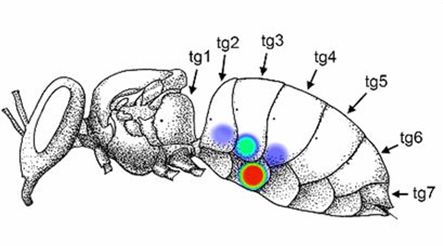
Fat Bodies and Vitellogenin By Kris Fricke             The cute animated video you’ve probably all seen during the national Varroa training sessions, other than having the bees’ hindwings in front of their forewings perpetuated another misconception by way of an almost imperceptible pause in the wrong place.  In saying “Varroa feeds one the bees fat  … Read more

Temperature and Hive Health

What temperature tells us about the health of a bee colony By Theotime Colin As beekeeping sensors become increasingly available and affordable, the pollination industry is eyeing the promise of a reduction of beekeeping costs and colony losses (https://www.tandfonline.com/doi/full/10.1080/00218839.2025.2552530) . Recent advances in our understanding of temperature regulation by bee colonies provide the first tangible … Read more

Resistance Revisited

Andrew Wootton First the bad news I wrote of the dangers of miticide resistance developing in Australia in December’s ABJ.[1]  Alarmingly, resistance to Bayvarol has already been reported from NSW in the AHBIC News of 11th February[2] and now on the 27th February, a further occurrence in Queensland is announced.[3] With the NSW mites, pyrethroid … Read more

Presidents Report: Stronger Than Fire, Stronger Together

On behalf of the Victorian Apiarists‘ Association, I acknowledge the Victorians impacted by recent bush-fires. Bushfires are an ongoing stress each summer and part of our beekeeping climate more than ever these days. To our fellow beekeepers, if you have been im-pacted by fires this summer, please reach out to us for assistance.In my region … Read more