The acute phase of varroa continues its spread across all of Victoria this autumn. Yes, unfortunately, next season‟s varroa reinfestations are looming large. Varroa doesn‟t care what type of hive you use or truck you drive, it is relentless and permanently changing how we manage our hives.
The news of synthetic pyrethroid and synthetic formamidine resistance in Queensland is also of serious concern for our industry. This is something that I will be asking our VAA-Ag. Vic Ag. Chem working group to report back to us on.
Of course, the geopolitical developments overseas continue to compound these pressures by driving up cost-of-living expenses and contributing to fuel shortages, particularly in regional Victoria.
We are also hearing consistent signals of fatigue from across the industry, with multi-generational and first-generation operators alike reassessing their positions as they try to navigate this mounting uncertainty and maintain sustainable businesses.
Beekeepers are part of a tight-knit community that is supportive, collaborative and passionate. Please continue to “give your fellow beekeeping mates a buzz“ to either ask for support or offer support. This is something we already do well. I think it’s times like these we do it that little bit more often.
I want to assure you that the VAA board, and numerous other volunteers are working hard to advocate for our sector and to bring programs and services to beekeepers to help you navigate these uncertain times.
Federal varroa investigation — ongoing concerns.
VAA recently issued a press release regarding the lack of findings from the federal investigation into the 2022 varroa incursion. There are significant concerns about the transparency and outcomes of this process, and we believe the Victorian apiculture sector deserves clear answers about how the incursion occurred and what systemic changes are being made to prevent future biosecurity failures.
Following our press release, representatives from the Department of Agriculture, Fisheries and Forestry (DAFF) met with VAA to discuss our concerns directly. It was disappointing to hear that while they described how in-depth the investigation was with 19 warrants to investigate our fellow beekeepers, they had nothing to offer in terms of a prosecution. They also had little to offer in terms of improvements to protect our country from exotic pests. We firmly advocated on behalf of Victoria‟s beekeepers that this is a major let down for our industry and for national food security. It shows there are short comings in our national biosecurity measures. It also shows more work needs to be done to move from a pop-gun defence to a more robust defence of food security and our apiculture industry.
Agriculture Industry Reference Group – Fuel crisis.
I am now attending the Agriculture Industry Reference Group (AIRG) Zoom call, chaired by Agriculture Victoria each week. This group brings together primary producer associations to discuss current challenges and provide a coordinated industry voice on pressing issues. At present, the Group’s focus is on the fuel crisis and its impacts across all agricultural sectors.
I have been providing regular updates to the Group on the specific impacts and concerns within the apiary sector. These include the effect of fuel costs on migratory beekeeping operations, the broader viability pressures facing commercial operators in regional areas, and the importance of getting our bees healthy and delivered to pollination jobs on time – pollination jobs that underpin billions of agriculture. During a recent industry roundtable on this topic, every association present shared their unique and shared challenges in dealing with this crisis. We welcome all members to contact the VAA to share their concerns and experiences, and we will raise your concerns at this state-level group.
Other projects and initiatives.
VAA key areas of focus include:
Strengthening education and decision-making capability. The Swanpool Commercial Advanced Varroa Workshop on 9 March provided a series of practical guidance for commercial operators, where all beekeepers where welcome. Many of the recorded presentations are now on our VAA YouTube channel for viewing.
Relaunching the Farm Business Resilience Program under the new banner of the Apiary Business Navigator Series, specifically designed for commercial beekeepers, commencing May 2026.
Improving communication and access to practical information. VAA continues to engage our members across multiple channels including the VAA Australian Bee Journal, our website, bulletins, socials, HiveMeet, conferences, and workshops. All to ensure timely and accurate information reaches all corners of our community.
Building workable bridges with the VAA-Ag.Vic Ag.Chem working group for an industry that needs to stay viable, and where functional treatment options are king. Engaging with our regulatory body to ensure safe practices and food products that fit within its regulatory role. It‟s important work, particularly in the face of treatment resistance.
Pushing strongly on resources, biosecurity, and industry recognition at government level. Building clear benchmarking and evidence-based decision-making is critical. Without this foundation, meaningful traction with government on support and intervention remains difficult.
Meeting with DEECA – our newly formed resource committee has met with DEECA to set up our first meeting aptly called Apiary Matters Workshop.
The work Sam Henty is leading in this space is invaluable, and we encourage all commercial beekeepers to engage with it.
2026 Annual Conference and AGM
— registrations now open.
Registrations are now open for the VAA 2026 Annual Conference and AGM, to be held Thursday 4 June to Saturday 6 June 2026. I encourage all members to secure their place early. Now is the time to lean into new ideas, new directions and new beekeeping friendships.
This year’s Conference features four major themes: Resources, Biosecurity, Industry Outlook, and Quality Assurance. We are delighted to welcome an outstanding lineup of international and Australian experts.
Dr. Peter Neumann, Vinetum Professor at the Institute of Bee Health and President of the COLOSS Association, will bring his expertise in bee health and the behavioural and molecular ecology of honey bees and their pathogens.
Professor Stephen Martin, whose four decades of research on Varroa destructor and bee viruses has shaped scientific and beekeeping practice worldwide, will also present in person.
Rounding out this impressive program is Dr. Cooper Schouten, Senior Research Fellow and Director of the Southern Cross University Bee Research and Extension Lab, recognised internationally for his leadership in honeybee biosecurity, invasive mite preparedness, and sustainable agribusiness systems.
For recreational, hobby, and sideliner beekeepers who are unable to attend on Friday, there is a Saturday program to run concurrently with a commercial quality assurance program.
Varroa Specialist Advanced Workshop.
Registration is also now open for the Varroa Specialist Advanced Workshop, tailored for all beekeepers. This workshop is also highly suitable for anyone performing the role of biosecurity officer for local and regional bee clubs. I encourage members in these roles to take advantage of this opportunity to build their skills and confidence.
Board nominations — your industry needs you!
By the time you read this, the VAA Returning Officer will have called for nominations for places on the VAA Board for the 2026–2027 association year. If you want to make a real impact on our industry, I encourage you to consider putting your name forward. VAA has represented Victoria‟s beekeepers since 1892. Our industry needs leaders that avoid the blame game, who can take responsibility with a focus on problem solving.
If a full board role is not possible right now, VAA has a number of subcommittees, projects, and initiatives that can only move forward with people from our community willing to contribute time, expertise, and commitment. If you would like to get involved in any capacity, please don’t hesitate to reach out.
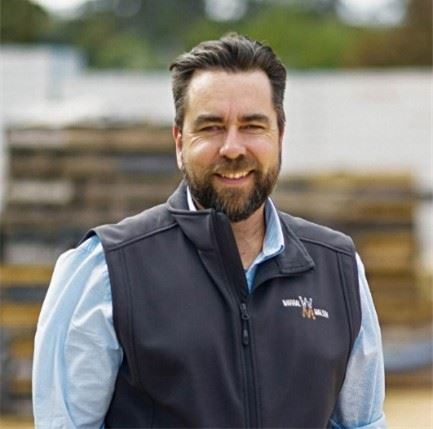
These are challenging times, no double about it. I often draw on advice from a good friend of mine who taught me a belief that no matter how hard things get, “we always win”. I remain confident in the resilience and resourcefulness of our beekeeping community. I can be contacted on 0429 857 835 should you wish to talk. Beekeepers first.
Lindsay Callaway
President, Victorian Apiarists’ Association