
August 2026
By John Edmonds
I have been away for 3 weeks visiting Queensland and inland New South Wales. We visited friends in Toowoomba and enjoyed having them show us around. I am amazed at the huge area of fertile irrigated land in the Darling Downs and Cecil Plains. The cotton harvest was just finished and the rolls were being taken to the gins. Such large areas of open flat cleared farmland would only support bees while crops are flowering, they are devoid of any flowering plants.
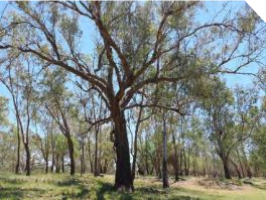
Coolabah [Eucalyptus coolabah] trees on the hillsides looked like they needed a drink – the area is in drought. Bimble box [Eucalyptus populnea] with its shiny round leaves are everywhere. I could not see budding in the northern areas. Towards Victoria, yellow box [Eucalyptus melliodora] and some red gum [Eucalyptus camaldulensis] could be seen. Around Nagambie the trees looked the most promising.
Large areas of canola are just starting to flower south of Parkes all the way to southern Victoria. It was hard to see bees placed on the crops. Many small canola plants could be seen and should flower later.
The new plantings of almonds near Numurkah looked impressive but no flowers were to be seen. These orchards have ventured upstream of the Barmah choke which restricts water flow down to the Riverland area.
It is reported that the almond trees are late flowering this year. Possibly three weeks later than usual. Concerns about hive strength and enough good hives being available to pollinate the flowers. Due to the heavy rains through central Victoria, beekeepers have been having trouble loading their hives on boggy ground. Muddy trucks have been seen arriving in the afternoon.
The amount of development in the rural towns is astounding, especially where retirement villages are being built in towns with rivers or lakes.
Locally, red box [Eucalyptus polyanthemos] has started to flower but is unreliable unless we get warm weather. Eggs and bacon is flowering with its striking orange flowers. Bees get a red pollen from it and is very good for breeding bees.
18/8/2026 Along the coast the bearded heath [Leucopogon parviflorus] and coastal teatree [Leptospermum laevigatum] is starting to flower. Yellow gum [Eucalyptus leucoxylon] has some trees white with flowers and most appear to have finished flowering, but odd areas have a few trees with buds.
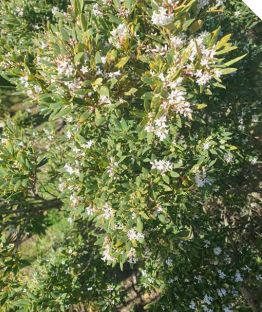
Sugar gums [Eucalyptus cladocalyx] have been forming small buds and hopefully they will yield a good crop of honey next summer. In the Western District many sugar gum plantations are being cut down for firewood and posts. The banning of harvesting timber from crown land has resulted in the wood cutters shifting to farm trees.
Local canola crops are mostly commencing flowering 16/8/2026 although some earlier crops can be found and some much later crops are still small. I am amazed how far bees fly to canola; two to three kilometres is no problem even when the temperature is only 14 degrees.
30/8/2026 The bees on canola crops are breeding with large slabs of brood and many drones unhatched but the hive scales show the hive weights have remained about the same without large increase. Hopefully the weather warms up. Faba bean pollen is now visible in the brood nest.
It appears the cold winds this winter and lack of vegetation in the Little Desert resulted in the hives doing poorly.
Spotted gum [Corymbia maculata] has some trees heavily budded and while I was inspecting some flowers, I noticed two bees on flowers that were immobile due to the cold.
Despite the cold I had a quick look at some five frame nucleus hives. Unfortunately, some had starved to death, while on another bee site they were full of bees and had good stores.
Do not believe some of the recipes for bee supplement patties. Last autumn I was recommended to add vegetable oil and vitamin C. I discovered the mix I made was rejected by the bees. I suspect hives that have excellent hygienic behaviour had removed most of the patties. The basic mix of faba beans, soya beans, Agrisea and sugar has all been consumed. I think it has helped the bees a lot as they were on an ironbark [Eucalyptus tricarpa] honey flow which is pollen deficient.
A feral bee colony that has been under a stone bridge for many years at Harcourt has died. Possibly a queen problem, hungry or most likely varroa as the region has been infected for over two years.
Two hives that I have at Bellbrae were infected by two commercial beekeepers who shifted hives into the area in March. 17 June 2026 I discovered one hive with 65 varroa in a wash and the other hive with 36. Examination of the drone brood showed varroa in every cell with pupae. I placed four oxalic acid strips in the brood nest and after returning from my holidays I checked the hives. Seven weeks later unfortunately I forgot my wash kit but the hives are booming full of brood and bees. The sallow wattle [Acacia longifolia] was making the air fragrant with perfume. I uncapped the drone brood and struggled to find any varroa. The oxalic acid strips had been chewed away in places but were still more than 70% intact. It seems to be important that the strips are in the centre of the brood nest. I am hoping the use of the oxalic acid strips every eight weeks will be enough to control the varroa. If the varroa gets out of hand then a brood break should get rid of them. I intend to return and do a wash and replace the oxalic acid strips if required.
Varroa is spreading quickly and will be shifted to new areas with the movement of swarms and bee hives. I have been uncapping drone brood to check for varroa and find it is an easier way to find varroa on the white pupae and they often move around making it easy to spot them. Sadly, I found varroa in five frame nucleus hives that have wintered in a remote area near Little River and previously Lara. I was shocked to find them as I considered the bees had been remote from possible infection sources. Looks like varroa can be anywhere now.
It is interesting that varroa will be in the drone brood and not in the worker brood during initial infestation. While checking an apiary with low varroa counts, I discovered one strong hive that had huge numbers of varroa with multiple mites in drone brood and about 10% of worker brood infested. Obviously, this hive had robbed out a dying infected hive. The first varroa detection in the area was approximately 5 kilometres away six months ago. Reinfection with varroa is happening. Feral and unmanaged bee hives are a real risk of varroa spread.
7/8/2026 As I surveyed the canola crop, it was about to send up the runners with flowers but the leaves looked droopy. After 2 hours the bees were returning with pollen from an earlier flowering canola crop 1.5 km away. Considering the day was a cool 14 degrees I was pleased. Fortunately, good rains have fallen and a good flowering should happen.
9/8/2026 Good rainfall of over 30 mm throughout the Geelong area will improve prospects for the future. The Mallee once again had excellent rainfall, and the Mallee trees have started to grow new growth. Future good honey flows can be expected.
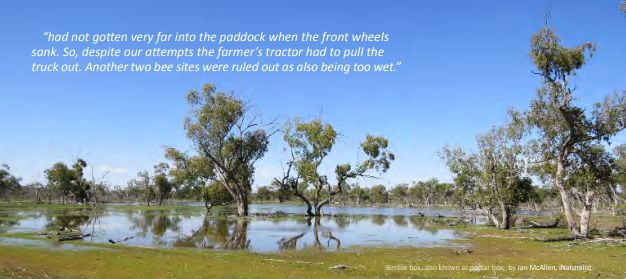
11/8/2026 [My offsider] Thomas and myself went to shift hives to canola. Thomas drove the ute into the bee site. The normally hard paddock looked wet, but I did not expect the truck to become bogged, but I had not gotten very far into the paddock when the front wheels sank. So, despite our attempts the farmer’s tractor had to pull the truck out. Another two bee sites were ruled out as also being too wet.
Shifting bees at present can be a challenge with the potholed roads. A pot hole on a country gravel road through a national park was so bad that a gate jumped out of its keeper on the truck tray. I had to change my intended return course due to the road being too rough to carry beehives without shaking them to pieces. The alternative track is very steep and only a single lane so I was nervous that a car would be coming up the track. To make matters worse I had to shift the truck during loading and run over the smoker. Best to have a spare smoker.
Customers are ringing seeking advice about varroa. It seems there is a lot of unreported varroa findings. It seems the Otways are infected and parts of the Western District.
A beekeeping friend has had a bad experience. He made his own oxalic acid strips following a YouTube video and sadly he has killed most of his bee hives. I think the temperature was incorrect and formic acid was created which killed his queens. Possibly the oxalic acid from the hardware store was not pure. I recommend purchasing treatments from proven sources. As a result, his bees were unable to earn money from almond pollination, so back to shearing sheep.
Beekeepers need to be careful when using oxalic acid, it is dangerous as it will cause burns. I see on YouTube beekeepers handling strips without gloves or using leather gloves. You must use nitrile gloves with no slits or holes. Acid burns may not be obvious for some hours. Making your own oxalic acid treatments must be done with caution. A beekeeper showed me how traces of the oxalic acid on the mixing vessels must be cleaned up using bicarbonate soda and how utensils fizz as the bicarbonate soda neutralizes the acid.
Beekeepers that have had varroa from the first infections are reporting that when the varroa numbers are about 16 per wash they “vape” the hive and then add oxalic acid strips. The strips seem to work for at least 8 weeks before the next treatment for which they are using Swedish cloths laid on top of the frames. It is important to have the oxalic acid strips near the center of the brood nest for the warmth to do the job. The beekeeper thought the strips may have been exhausted after 8 weeks and the bees had chewed them down, so he touched his tongue with the strip and discovered they were still very much active [we want to be clear that you should under no conditions lick any miticide strips -Ed.]. I do not want to use vaping as I think it is dangerous especially with workers. The oxalic acid dribble seems safer way to treat the bees.
An elderly beekeeper told me that he is unable to cope with the coming varroa and the apiary officers wanting him to make honey samples and file Bee Max reports so the remaining bee hives he has killed with petrol. Now has no more problems! Another beekeeper has told me that he cannot afford the cost of varroa treatments so is giving away his hives. He will concentrate on catching swarms for a fee.
A beekeeper from near Avoca discovered that his 80 bee hives were full of honey but the bees had dwindled away to small handfuls. Not doing anything to treat hives with varroa results in dead hives. He decided to retire and has sold his truck, loader hives and spare equipment. Doing nothing your bees will most likely die. Bees at the almond pollination that come into contact with it will find it is much quicker killing the bees. It requires immediate treatment.
Brazilian organic honey is being challenged by American beekeepers. Is it authentic? Argentine beekeepers have to provide tracing of their honey and its source through to extraction. Beekeepers have to apply for an electronic code which can be checked by police when they check truckloads of bees, honey or equipment. Export markets are demanding traceability
20/8/2026 Hives that I have located on the edge of the Geelong suburb of Grovedale have wintered very poorly. Despite yellow gum and wild mustard flowering throughout the winter the bees have eaten their stores and are weak. Another bee site near St Albans Park have wintered a little better but also are light. I have been unable to open them due to the cool weather. I suggest if other hives in the Geelong suburbs are similar, they will need feeding.
23/8/2026 The first flowers are appearing on the Manchurian pears [Pyrus ussuriensis]. The Greater City of Geelong Council has planted many nature strips with these trees. They flower early spring and due to different varieties flower over a staggered time. They yield nectar and pollen. I suspect cause the bees to swarm due to copious brood making.
The new suburbs that are developing quickly do not have much room for gardens as the house occupies most of the ground. The gardens are generally minimal gardens so there is very little flowering plants for bees. The developers knock down the existing trees to make the building blocks, so it is only the new nature strip trees that need to grow to maturity. Seems wrong especially as the Greater Geelong City Council is urging people to plant trees as there is very little tree cover across the city.
28/8/2026 The farmer rang to say he needed to apply fungicide to the canola crop. Fortunately, most fungicides used for canola appear to be safe for bees. I will watch closely the result. Still no weight gains at this crop.
In a remote area I inspected hives for varroa and all the double eight frame hives were clean. As I was about to leave, I inspected some overwintered five frame nucs and was astonished to discover varroa in low levels. [NSW beekeeper] Stephanie says that she thinks the presence of virgin queens in colonies attracts drones carrying the varroa.
Report from the almond pollination that the scale hive increased 11 kg in weight during the pollination. Barrel clover [Medicago truncatula] flowered very well, and some white mallee [Eucalyptus dumosa] flowered.
Varroa is increasing and hives located in the Inverleigh and Teesdale area are at risk of infection. I checked hives at two locations and found approximately 30% of the hives had varroa in the drone brood.
The spring is looking good with abundant capeweed [Arctotheca calendula] starting to flower. Clover species have flowers and the bottlebrushes are heavily budded with some starting to flower.