
My First Almond Orchard Experience
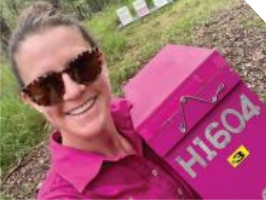
By Jana Hamilton
There is something quite extraordinary about seeing an almond orchard in full bloom for the first time and being a part of the largest movement of livestock in the Southern Hemisphere.
As a beekeeper from Far North Queensland, I’ve spent years thinking about that moment. Standing among thousands of flowering almond trees in Victoria. It was a bucket-list experience that certainly didn’t disappoint.
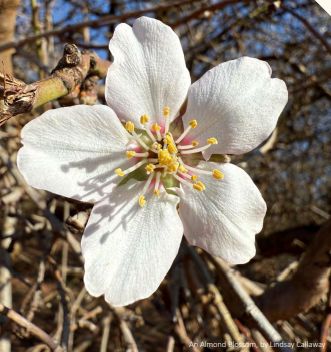
From above, the orchard seems almost endless. Row after row of trees covered in delicate white and pale pink blossom. From the ground, it is breathtaking. A carpet of petals and rows that can draw you in as if they lead to a secret garden. It is truly spectacular.
I couldn’t help but be completely mesmerised but I wasn’t just seeing flowers. I was seeing an enormous food source, a huge pollination opportunity and thousands upon thousands of bees working the blossom.
One of the things I found particularly fascinating was learning how closely pollen production is linked to the rising sun, with the morning light triggering the flowers to begin releasing their pollen. As the day warms the bees get busy collecting that pollen throughout the morning and into the early afternoon. Nectar production however doesn’t start until the flowers are warm, generally late morning. I found the nectar had a surprisingly distinctive flavour — freshly secreted nectar is sweet, bitter and acidic with a clean and mildly cleansing finish.
Coming from the wet tropics, where the conditions and pollination crops couldn’t be more different, it was fascinating to learn about the almonds and see colonies thriving despite varroa mites’ presence.
I am yet to detect varroa in my colonies back in Far North Queensland, but seeing healthy, strong colonies being carefully managed for varroa gave me a real appreciation for the importance of staying vigilant and being prepared.
It was also encouraging to hear how closely farmers and beekeepers are working together so that both parties achieve their desired outcome. That kind of communication and cooperation is essential for supporting healthy colonies, effective pollination and productive orchards.
As beekeepers, we can’t afford to become complacent. Varroa isn’t just a beekeeping issue. What happens to our bees has a ripple effect far beyond the hive — affecting the people who rely on them for pollination, the crops they help produce, and ultimately what we see available (and pay for) at the checkout. Healthy bees support healthy food systems.
A honey bee doesn’t know she’s providing an essential agricultural service. She’s simply out looking for food. And this is the part of beekeeping I love. Watching bees do what they do best, while knowing that their little daily adventures have a much bigger impact than they realise. For my first experience of almond pollination, I couldn’t have asked for a more beautiful classroom. Thousands of trees, millions of flowers and a whole lot of fun with the bees — what’s not to love?