May 2026
AHBIC Chair & CEO Update
By Danny LeFeuvre & Jon Lockwood
Just as we almost start to get used to the new world with varroa, along comes resistance. Another devastating game changer for the industry. As we head into conference season, I am sure beekeepers will be soaking up all the information from the expert presenters around managing resistant mites. As we have said in many of our communication the basic principles still remain the same. Rotate your modes of action and monitor your mite numbers.
It is extremely upsetting to learn that Australia has identified resistance genes in both Pyrethroid; L925l/L925M (Bayvarol and Apistan), and Amitraz; Y215H (Apivar and Amitraz). NSW DPIRD have determined the AMR1 virus associated with new varroa points to it being most similar to samples from North America and Belgium as the origin. Fortunately, no new viruses have been identified, once again, we may have dodged the deformed wing virus bullet. AHBIC has been communicating with the investigators and government to identify the pathway of entry. It simply is not acceptable that not one but now two separate mites have entered our shores without a definitive pathway. If you know of any suspicious activity, no matter how small, please contact AHBIC or REDLINE.
AgriFutures
AHBIC is committed to further develop and foster the relationship between the honeybee industry and AgriFutures. AHBIC feels it is extremely important to ensure that AgriFutures deeply understand the challenges and needs of our industry.
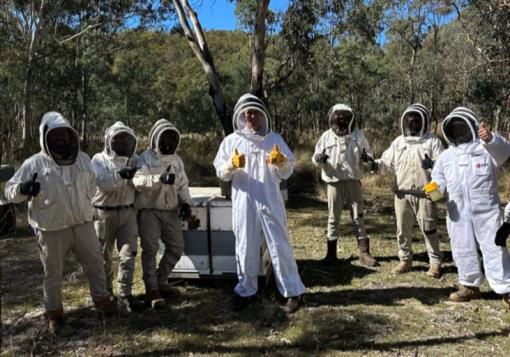
Over the past months, AHBIC have had several engagements with the AgriFutures staff. Amanda Olthof the Senior Manager of Levied Industries and Luke Evans the Program Manager for the Honeybee and Pollination Program came to the AHBIC executive meeting to discuss issues and learn how we can build a stronger relationship. Luke Evans also came to visit AHBIC chair Jon Lockwood at his base. Luke explained that the visit was very important for him to see in person how a commercial bee operation works. He will now have a greater understanding of beekeeping.
In March, Mick Vetch, the new Chair of AgriFutures called to visit Jon at his premises. They discussed the dynamics of our industry and Jon gave him greater context as to our industry‟s needs. Mick was involved with our industry in the past when he sat as the NSW Shadow Agriculture Minister. It‟s great to have someone with prior knowledge and understanding in the role.
There are four positions coming up to sit on the Honeybee and Pollination advisory panel in the next 12 months. Please take a look at the AgriFutures website, and keep this in mind for yourself or someone that may be suitable: Advisory Panel Recruitment | AgriFutures Australia.
Honey and Pollination
Honey production has remained average over the past quarter nationally. Stockpiles in beekeepers and packers sheds are diminishing. Recently we have seen the price slowly start to creep up, however this is not enough to provide beekeepers financial sustainability. Diesel prices have had a significant effect on running costs. Thankfully over the last week prices have come down to a more realistic figure. Looking forward, it is predicted that much of the country will experience a dry winter and spring which will impact next season‟s production immensely.
AHBIC patiently wait for DAFF to unpack the findings of the recent imported honey survey, this is extremely frustrating, but nothing happens fast in this area.
Almond contracts and prices are currently being negotiated. Brokers, growers and beekeepers are becoming nervous as many reports are coming through that Varroa is significantly impacting hive health. Almond growers in some regions are reporting a tough harvest as many received unwanted rain in January. The horticulture industry are important partners of the bee industry, and we need to navigate the tough times together.
APVMA and product registrations
There has been commentary in industry around the APVMA process and what role AHBIC plays. I have provided a brief explanation on AHBIC‟s role for both emergency permits and full registrations in a separate article (see page 31).
There has also been some commentary around the recent Canadian oxalic acid strip registration supported by the Canadian honey council and comparisons to NZ own use permit system and again AHBIC‟s role. The Canadian registration system is very different to Australia. They can register active ingredients by providing shared a common data set. Multiple labels/products can then leverage that common data set to expedite the process. This does not allow for the use of generic products as some are suggesting. Only products registered with the PMRA (Canada‟s version of the APVMA) can be used, which in that aspect is similar to the Australian system. The devil is always in the detail.
Alternative varroa treatments
AHBIC continues to meet with manufactures searching for new products and encouraging them to expand to our market. We also work with our RDC‟s in Hort Innovation and AgriFutures to ensure research is occurring to find new solutions. We sit on many steering committees to ensure the outcomes of the research is practical and useful for beekeepers. Some of the work that is underway includes;
- Fungal biocontrol through Macquarie University
- RNAi interference technology with multiple projects and some startups progressing this technology in Australia. This is the same technology as Norroa (Canadian based RNAi product)
- Projects by Southern Cross University (Dr. Cooper Schouten) and NSW DPIRD to assess and compare treatments and efficacy including off-label work
- Macquarie Uni (Dr. Theotime Colin) developing non-chemical control methods of mite management
- Australian Queen Bee Breeding Association national varroa mite breeding strategy to select for varroa tolerance.
Operation Decker – Federal Investigation into Varroa
AHBIC has lobbied DAFF to reinitiate the investigation in light of, what is now confirmed, a new varroa incursion. AHBIC continues to provide information where they can, along with NSW DPIRD. We have not had any confirmation from DAFF that they will re-open the investigation as yet. Anyone who has information around either of these two incursions can anonymously report by calling Red Line on 1800 803 or via their website: https://www.agriculture.gov.au/biosecurity-trade/policy/legislation/compliance/redline.
Imported Honey
AHBIC continues to work with DAFF who now have the testing results from the national imported honey survey. DAF is working with participating jurisdictions on next steps. This is a positive outlook with DAFF recognising the seriousness of the issue and commitment to finding solutions.
Red Dwarf Honey Bee Incursion – Burrup Peninsula WA
The most recent situational update from the WA DPIRD team has again reported no further detections of foraging red dwarf honey bees in the quarantine zone. This is very encouraging with no new detection since July 2025. The proof of freedom surveillance will continue through to the end of 2026 and with no new detections proof of freedom will be achieved.
Biosecurity preparedness work
We are pleased that AgriFutures has funded the development and updating of our key industry biosecurity preparedness documents. These include the biosecurity plan and several high priority pest contingency plans, including Tropilaelaps mites. These documents provide the foundation for any future responses with the current versions outdated or missing, so this project will significantly strengthen our preparedness as an industry. Industry consultation is a feature or the project, and beekeepers will have the opportunity for input.
The Month Ahead
Conference season starts in the coming weeks with NSW in Bathurst being the first. AHBIC will have a presence at all state conferences culminating with the Tasmanian conference in Launceston early July along with the AHBIC AGM.
AHBIC continues to participate in the fuel crisis meetings, food security discussions and continue overseeing the Plant Health Australia managed biosecurity programs. The Plant Health Australia AGM and deed meetings are in Adelaide this May. This will include a deed review meeting where AHBIC will feed in the lessons from the varroa response.
AHBIC Biosecurity Update – Resistant Varroa Mites
(Combined updates of April 10th, 23rd, & 29th, 2026)
Amitraz Resistant Varroa Confirmed in NSW, New Mite Incursion
Amitraz resistance has now been confirmed in New South Wales. The same populations in NSW that previously tested positive for pyrethroid resistance, are also now confirmed to have amitraz resistance. This confirmation is in addition to the previous confirmation of pyrethroid and amitraz resistance in Southeast QLD.
NSW DPIRD have confirmed that the resistant mite populations detected in QLD and NSW are a new population of mites unrelated to the original 2022 detection. Further work is being undertaken to determine how these mites arrived in Australia and how far they have spread.
So far, the hives tested have not shown presence of any new exotic viruses. However, further genetic analysis of the endemic virus AR1 (aka rhabdovirus) found with these mites, confirms it is an exotic strain and different in origin to the existing endemic AR1 virus associated with the Newcastle original population.
The Consultative Committee on Emergency Plant Pests (CCEPP), drawing on NSW DPIRD tracing and laboratory testing, has verified that this resistant population is present across Queensland and New South Wales. Tracing and subsequent lab testing has also identified that the first mites detected in South Australia’s Riverland to be part of the new population but is not considered to be established.
The CCEPP members agreed that the new incursion of resistant mite populations cannot be eradicated due to a lack of containment and the unknown entry pathway.
Varroa synthetic chemical resistance is considered established broadly across NSW and southern QLD. It is no longer considered geographically confined with reports of treatment issues being confirmed across large areas.
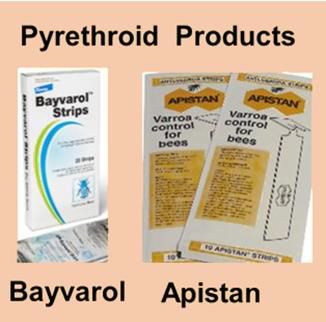
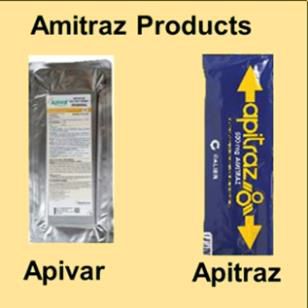
Beekeepers are experiencing reduced or even complete failure of treatments due to populations of Varroa destructor having resistance to synthetic pyrethroids and amitraz products this affects Bayvarol, Apistan, Apivar and Apitraz branded products, pictured.
Resistant mites appear to be spreading through the trade and movement of live bees and colonies as well as proximity to affected apiaries in both NSW and QLD. The resistance has been recorded across NSW and southern QLD, additional areas are likely to be impacted.
These miticide resistant varroa mites will eventually become widespread, meaning beekeepers will eventually have lower efficacy from key synthetic control tools, and there will become an increased risk of high mite loads and colony losses across Australia.
Within these resistant populations, both pyrethroid (Bayvarol and Apistan) and amitraz (Apivar and Apitraz) treatments are less likely to be effective and, in some cases, complete treatment failure has been reported.
For the majority of beekeepers in both NSW and QLD, treatments will continue to be effective due to the resistant populations being limited in their distribution.
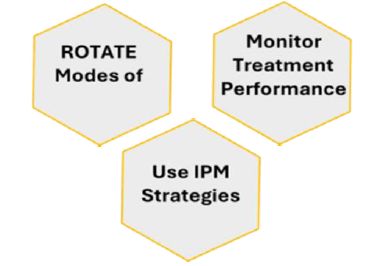
This means that beekeepers who do not have confirmed resistance should continue to use all available options to control mites. Beekeepers must ensure they ROTATE modes of action and MONITOR for efficacy of treatments [that is, do a soap/alc wash after the treatment to confirm it was effective].
If you suspect that pyrethroid or amitraz resistance-carrying mites are in your apiaries or in your area, you should not use amitraz or pyrethroid products where possible. Instead use organic acid-based products as there is no known resistance.
If you are already treating with synthetics and suspect resistance, then act swiftly to test your colonies via state Bee Biosecurity Officer assistance or privatised testing facilities. Confirmed synthetic treatment failures will require changing management practices including integrated pest management and using only organically derived treatments to give your colonies the best chance of survival.
We acknowledge that this news, on top of existing pressures on beekeepers, is a lot to cope with.
Economic Thresholds – Can be Adapted
The current thresholds are a good guide for beekeepers to adopt. However, they are not fixed or legislated nor stipulated on product labels. It‟s up to individual beekeepers and their risk appetite and situation to determine mite thresholds.
Where there is resistance, beekeepers are reporting they are struggling to reduce high mite numbers with acids alone, so re-evaluating thresholds can help in ensuring you maintain low mite counts in the short term.
If you know or suspect you might have resistance, it‟s important to consider lowering your mite threshold to ensure low mite counts can be maintained. Beekeepers need to plan for emergency situations when treatment failure is detected to prevent mite run away in hives.
Monitor Chemical Treatment Performance
By knowing your mite levels, you can determine not only when to treat but also whether your treatment is working.
Pre-treatment
- Alcohol wash hives immediately prior to treatment to establish a baseline.
- The more hives you wash the better, but at least 10% per apiary.
Record individual hive mite counts (i.e. note wash result on lids) averaging is also ok but not as accurate.
Mid-treatment
- Alcohol wash hives mid-treatment time, i.e. at weeks 3-4 (Pyrethroid) and 5-6(Amitraz), to establish early confirmation of efficacy or potential failure.
- Keep the method consistent.
- You MUST monitor the same hives in the apiary each time. This will allow a clear comparison to assess treatment efficacy [note this is distinctly different from general monitoring for varroa levels in which you should do different hives each time].
If mite counts are the same or slightly lower than baseline there is no cause for immediate concern, but it is important to follow up with post treatment monitoring.
If mite counts are significantly more than the pre-treatment/baseline in any hive, this is cause for concern and we recommend:
1. Immediately remove the synthetic treatment, use an organic acid treatment to knock down phoretic mite numbers, immediately continue with next treatment in IPM strategy.
2. Contact your state department apiary team.
Collect mite samples arrange further testing immediately.
Post-treatment
Alcohol wash hives at treatment removal, not a week after treatment removal, again following the same procedure as pre and mid treatment.
If mite counts are the same or more than the baseline mite numbers you need to take action
1. Consider following up with an urgent organic acid treatment to knock down phoretic mite numbers as quickly as possible.
2. Immediately continue with next treatment in IPM strategy to ensure colony survival.
3. Contact your state department apiary team.
Collect mite samples and arrange further testing immediately.
Further Information
AHBIC Varroa Mite Resistance article
SCU Varroa Resistance In-field Test